
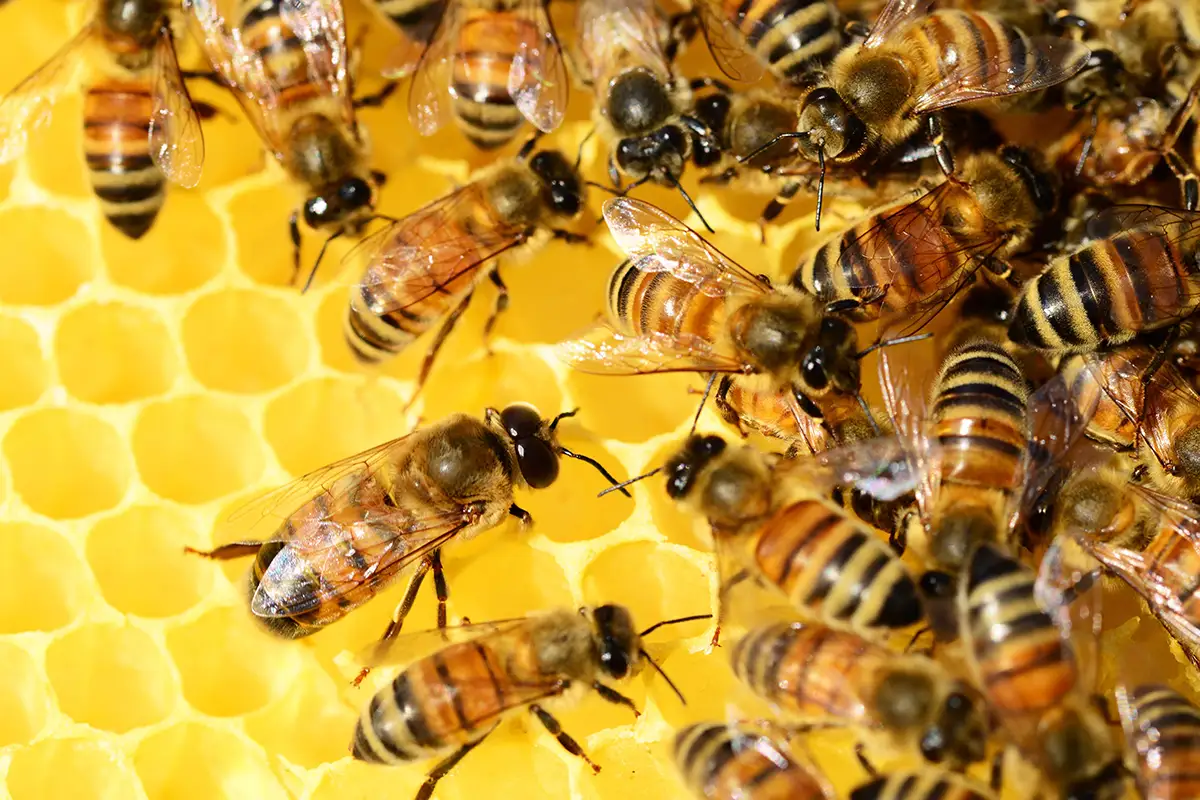
How Many Honey Bees Live in a Hive?
The other day, a customer hired us to remove a beehive from underneath the eaves of his roof. After completing the job, we had a conversation with this customer, who was asked how many bees lived in that hive. This very question has now become the inspiration behind the topic of today’s article.
Seasonal Triggers for Population Surges
Warmer days and longer light facilitate greater bee activity for growth. Nectar flows from blooming plants give the bees fuel to raise more young. Temperatures above 50 degrees let brood develop more comfortably.
Winter Season
Winter flips the script on hive life as the colder temperatures slow down bee activity significantly, while cutting down on number of bees that reside in the hive to conserve resources.
Moreover, the focus turns inward with no more big foraging trips. Instead, the bees inside the hive guard the queen and brood in a tight ball.
Average Winter Population Figures
A winter hive needs at least 10,000 to 20,000+ bees to form a warm cluster. This group generates heat by vibrating wings, like a living blanket. If the number of bees inside the hive drop much below that, the colony cannot generate enough heat to survive the winter.
Spring Season
Spring is the busiest season for honey bee activity here in Central Arizona. Colonies can grow fast to handle the plethora of flowers and food available here in the Valley of the Sun. That said, a healthy hive can reach its biggest size during the spring season, full of foragers and builders.
Average Spring Population Figures
During late spring here in the Phoenix, AZ metro area, you often see 50,000 to 80,000 honey bees in a single hive. This figure can sometimes grow to 100,000+ in years in mature or “Africanized” hives where the preceding winters are rainy and when there are strong queens and steady food supplies that let the colony expand.
The Role of the Queen in Population Growth
The queen bee drives the hive’s growth. She lays up to 2,000 eggs each day in peak season which adds thousands of new bees every few weeks, keeping the population high.
And while the queen bee’s job is reproduction (laying eggs), the worker bees feed and care for her eggs, turning them into the next wave of bees. Thus, the queen bee and worker bees together determine how many honey bees live in a hive.
Average Fall Population Figures
As the end of fall season approaches, brood rearing hive activity begins to wind down. The colony ejects drones, who are not needed during the winter. Workers born in summer live just six weeks, so their numbers drop quickly as well.
What Makes Up the Hive Population?
A hive isn’t just a bunch of adult bees buzzing around. It includes eggs, larvae, and pupae too. Counting all stages gives the full picture of how many honey bees live in a hive.
The Solitary Queen vs. the Worker Majority
There is a single queen per hive amid 20,000 to 60,000 worker bees in the spring. She’s the mother of all, laying eggs non-stop. Workers handle everything else, from nursing to guarding, making all the collective decisions.
Drones
Drones show up in spring and summer, numbering 500 to 1,000 in a busy hive. Their job is to mate with queens from other colonies. But drones are like temporary hires. They live only for a season, then they’re gone.
Brood, Pupa, and Immature Stages
Brood adds roughly 10,000 to 30,000 more to the hive count during warm months. Eggs hatch in three days, larvae grow for six, then pupae cap for 12.
Resource Availability
A dry winter (lack of rain) cuts blooming flowers in the upcoming spring. This can lead to reduced beehive populations.