
Do Honey Bees Really Need to Live in a Hive?
Someone asked me the other day whether honey bees really need to live in a hive. That immediately became the genesis of this article.
At the moment, of the approximately 4,000+ bee species in the United States, honey bees make up just a tiny fraction.
Many people think that a hive is the only home honey bees can have. That’s not quite true. A hive can mean a natural spot like a hollow tree or a man-made box for beekeeping. In the wild, honey bees look for enclosed spaces on their own.
Honey Bee’s Natural Instinct for Shelter
Honey bees have a built-in drive to find secure shelter. They don’t wander aimlessly. These insects evolved to pick cavities that shield them from the world outside.
Cavity Nesting
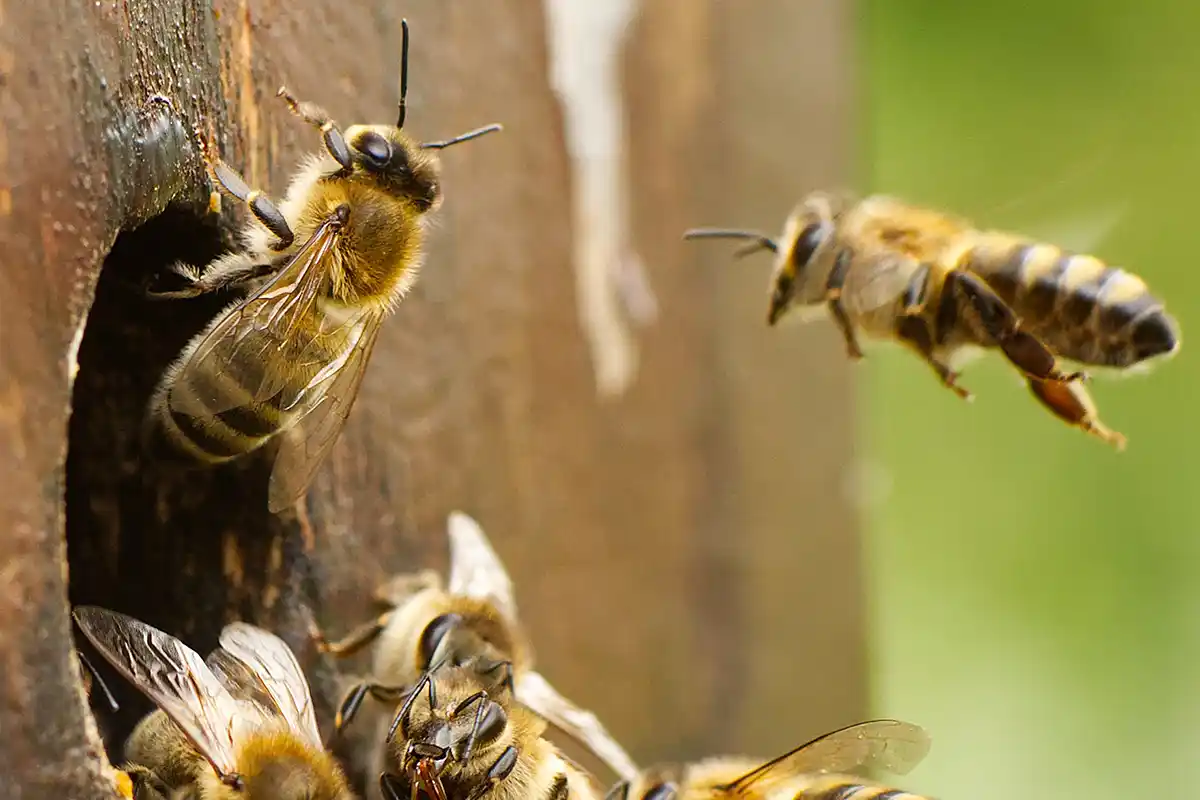
Honey bees prefer enclosed areas such as tree hollows, cracks in rocks or even the cavities inside walls of homes or buildings. So, a scout bee looks for such spots before the whole colony moves in.
Temperature Regulation
Bees keep their young warm at a temperature roughly between 91 to 95 degrees Fahrenheit. A cavity within a tree, or inside walls, helps to minimize energy expenditure, and provide insulation that helps them keep the core temperature stable. How? The thick walls (e.g. of a tree) can help to retain heat during cold nights and also can mitigate rising temperatures resulting from direct sun in the summer.
Defense Against Predators and Pests
An open nest invites trouble from birds, bears, and/or insects, such as ants. A cavity narrows the point of entry to one place. Bees can guard and defend this singular entrance to the cavity more easily than an open nest.
Natural Bee Colony
Wild honey bee groups build homes that fit their needs. These aren’t perfect squares like store-bought hives. They form in whatever cavity they can find. As such, a successful wild colony fills a space that can be up to or greater than a large backpack.
Honeycomb Construction
Honey Bees chew wax from their glands to make hex-shaped cells. In a natural hive, combs hang straight down from the top. A small colony might need just a few square feet. Larger ones claim tree trunks up to 20 feet high.
Resource Storage
A wild cluster stores enough honey for months. Studies have shown that honey bees can pack about 20 to 90 or more pounds per colony. That’s key for tough winters.
Swarm Intelligence in Site Selection
When a honey bee group splits, scouts fan out to hunt for homes. They do a kind of waggle dance to share finds with the hive. Keep in mind that some studies have shown that honey bee scouts test dozens of potential sites before settling on a final location.
The Managed Hive
Beekeepers use wooden boxes to offer bees a man-made alternative to natural hives found in cavities of trees. These hives stack like drawers have wooden frames that hold the comb steady. This setup also enables humans to harvest some honey without destroying the nest.
Can Bees Thrive Without a Hive Structure?
So, do honey bees need to live in a hive, whether it is natural, such a tree cavity, or man-made such as a Langstroth hive? The short answer is yes. Honey bees need some type of protected hive structure to survive. That’s because a natural cavity or a man-made hive provides the shelter for warmth, food storage, and safety.