
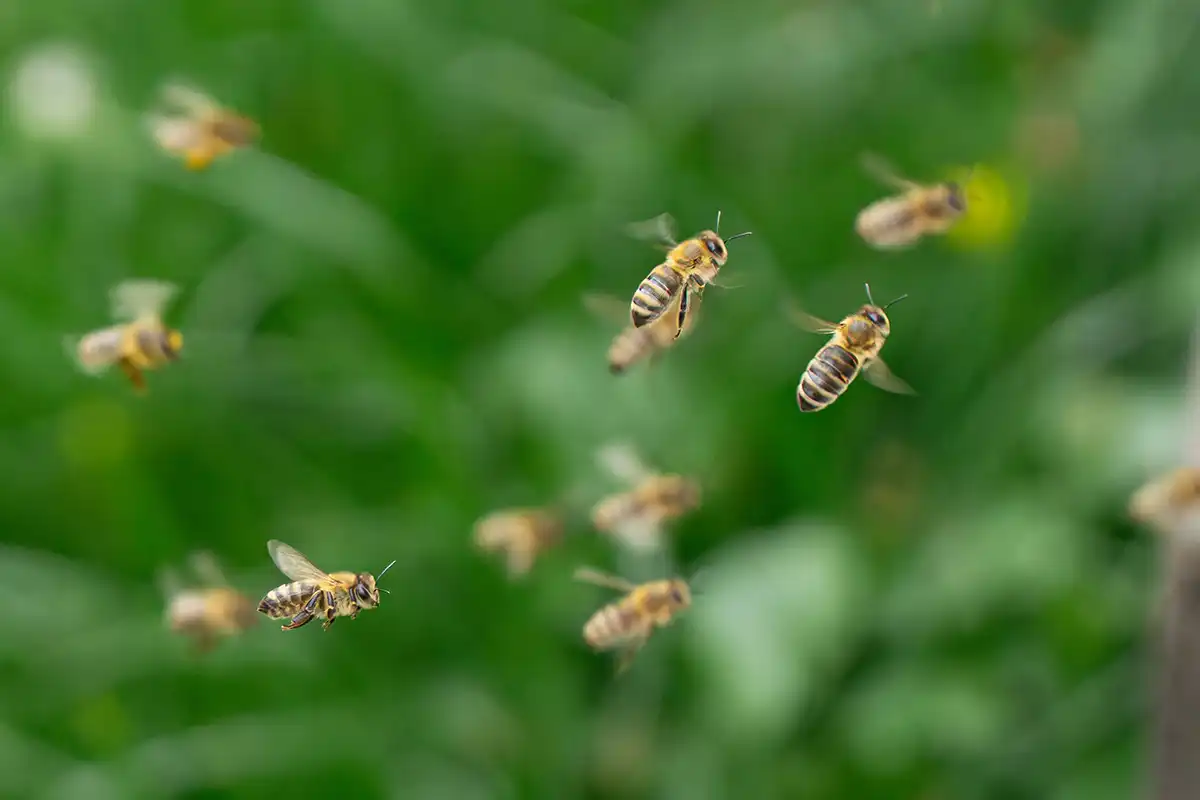
Are there Africanized Bees Near the McDowell Sonoran Preserve?
Over the years, we’ve noticed that an increasing number of our North Scottsdale (particularly in McDowell Mountain Ranch and DC Ranch) bee removal clients have become concerned about the presence of Africanized bees. So, it comes as no surprise when they ask us whether there are Africanized bees living in and around the McDowell Sonoran Preserve.
The short answer is yes, wild “killer” bees live all over the McDowell Sonoran Preserve and the neighborhoods of homes beside it. As local bee experts, we can honestly say that almost every wild bee nest found in the North Scottsdale area belongs to this aggressive type. Because the desert preserve is so large and protected, it acts as a giant natural home for these easily angered swarms.
The Swarm Next Door: Understanding Aggressive Bees Near Scottsdale’s Desert Preserve
The beautiful trails and mountains of Scottsdale’s McDowell Sonoran Preserve are home to many wild animals. While most hikers watch out for rattlesnakes, there is another danger flying through the air and hiding near the ground: Africanized honey bees, commonly known as “killer bees.”
For anyone who hikes these trails or lives in the homes nearby, knowing about these bees can keep you and your pets safe.
Why the Preserve is Full of “Killer Bees”
Africanized bees are a wild mix of bee types that have completely taken over the desert environment in Arizona. They do very well here because they handle extreme summer heat easily and need very little water to survive.
The preserve covers over 30,000 acres of wild land. This gives the bees thousands of perfect places to build their nests, including:
- Deep cracks in large desert rocks
- Hollow spaces inside old saguaro cacti
- Thick desert bushes and dry riverbeds
Hikers often walk right past active nests hidden just a few feet off popular walking trails, like Brown’s Ranch Trailhead.
Moving From the Desert Into Your Yard
Bees do not care about property lines. When a wild nest inside the preserve gets too crowded, half of the bees leave together to find a new home.
Because these wild bees are not picky, they easily move into residential neighborhoods. Local bee removal companies often find large, angry nests that moved from the preserve into neighborhood yards. The bees love to hide in places like:
- Holes in stucco walls and roof edges
- Underground boxes that hold water meters or irrigation valves
- Upside-down flower pots and outdoor furniture
Why Are These Bees So Dangerous?
An Africanized bee looks exactly like a normal, gentle garden bee. You cannot tell them apart just by looking. However, their behavior is completely different.
Because life in the desert is tough, these wild bees are always on high alert to protect their food and their home. If you walk too close to a hidden nest, or if a landscaper starts a loud, vibrating tool like a weed whacker nearby, the bees will attack.
While normal garden bees might only send a few bees to chase you away, Africanized bees attack by the thousands. They will chase a person or a dog for a quarter-mile, stinging repeatedly.
Easy Safety Rules for the Trail and Backyard
If you live or hike near the preserve, follow these simple rules to stay safe:
- Listen Closely: If you hear a loud, steady buzzing sound, stop walking. Do not go look for it. Turn around and walk away.
- Watch for “Bee Highways”: Look for lines of bees flying back and forth into the same hole in a wall, rock, or tree. This means a nest is inside.
- Skip the Perfume: Do not wear sweet-smelling lotions or bright, floral-colored clothes when hanging out near the desert.
- Run and Cover: If bees attack, do not stand still and swat at them. Swatting makes them angrier. Pull your shirt up over your face to protect your nose and mouth, and run fast until you can get inside a house or a car.